Navigating the Noise: How to Spot and Avoid Misinformation Online
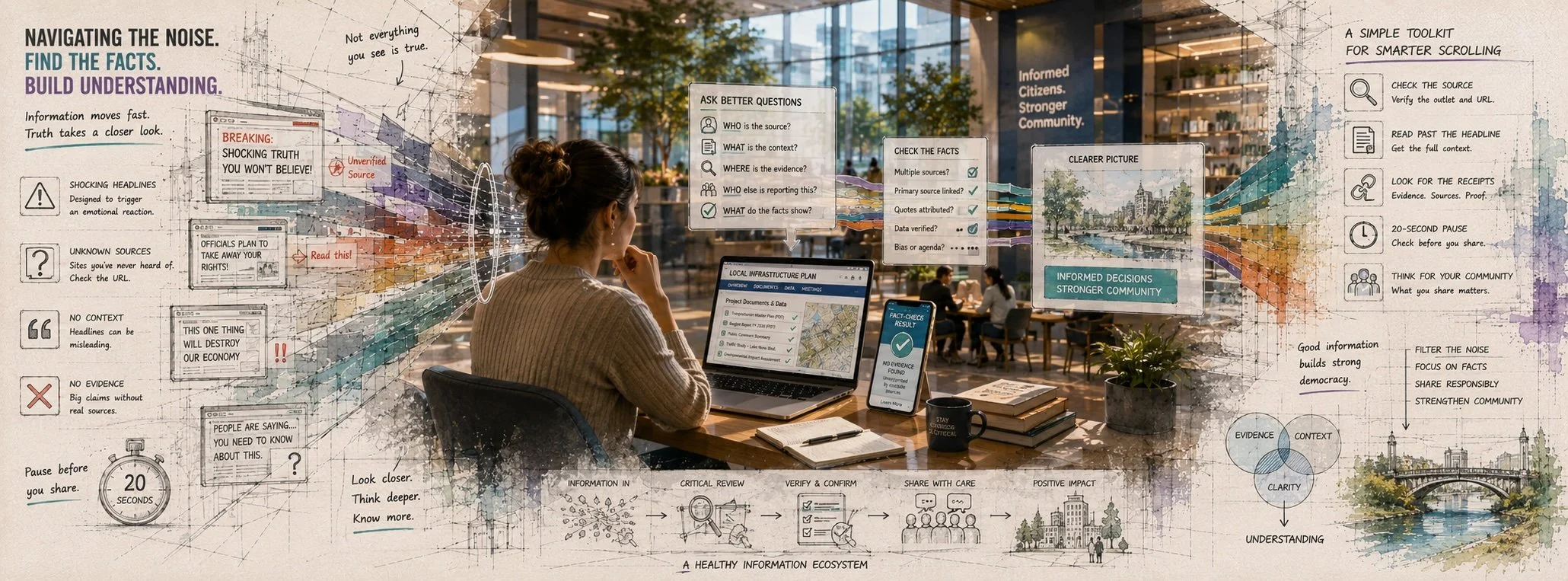
We’ve all been there. You’re scrolling through Facebook, X (formerly Twitter), or Nextdoor, and you see a headline that makes your jaw drop. It might be a shocking quote from a politician, a scary statistic about the economy, or a claim about a new local policy that seems completely outrageous. Your immediate reaction is an emotional spike—anger, fear, or vindication—and your finger hovers over the "Share" button.
In today’s digital world, information moves at the speed of a click. But so does misinformation.
As voters and community members in Lake Nona, staying informed means more than just reading the news; it means knowing how to filter out the noise. Misinformation is intentionally designed to exploit our emotions. Protecting ourselves against it just takes a few healthy digital habits.
Here is a simple toolkit to help you spot misinformation and keep your social media feeds grounded in reality.
1. Check the Source (and the URL)
When an article pops up on your feed, look closely at where it came from. Is it a well-known, established news organization with a history of editorial standards? Or is it a website you’ve never heard of with a strange URL?
Be on the lookout for "imposter sites." Sophisticated bad actors will often create websites that look exactly like trusted news outlets but use a slightly altered URL (like adding a ".co" to the end of a familiar domain name). If the "About Us" page looks vague or highly partisan, treat the information with skepticism.
2. Read Past the Headline
Headlines are written to do one thing: get you to click. They are often sensationalized, stripped of context, or completely misleading compared to the actual article.
Before you share a post, comment on it, or let it change your opinion, take two minutes to click the link and read the full text. You will frequently find that the nuance missing from the headline completely changes the narrative.
3. Look for the "Receipts"
Credible reporting relies on evidence. As you read, ask yourself: Where did this information come from?
Does the article link directly to official government databases, court documents, or primary sources?
Are quotes attributed to real, named individuals, or are they hiding behind vague phrases like "people are saying" or "sources close to the matter"?
If a claim is making a massive, groundbreaking accusation but fails to provide a single verifiable source, it is highly likely to be fabricated or distorted.
4. Practice the "20-Second Pause"
The most effective misinformation is designed to trigger a strong emotional response. If a post makes you instantly furious or perfectly validates your worst assumptions about "the other side," pause.
Take 20 seconds before sharing. Use that time to open a new tab and paste the headline into a search engine. See if other reputable sources are reporting the exact same story. If no one else is covering it, or if fact-checking sites have already flagged it, leave it unshared.
Take a Deeper Dive: Digital Literacy Resources
If you want to sharpen your media literacy skills or learn more about how online deception works, explore these excellent resources:
Fact-Checking Staples: Bookmark FactCheck.org (a project of the Annenberg Public Policy Center), PolitiFact, and Snopes. These nonpartisan organizations do the heavy lifting of tracing rumors, altered photos, and political claims back to their original context.
The News Literacy Project (newslit.org): A fantastic nonpartisan education nonprofit that offers free resources, quizzes, and tools (including their "Rumor Guard" platform) designed to teach citizens how to think like smart news consumers.
Podcast: Skeptoid – A long-running weekly podcast hosted by Brian Dunning that uses critical thinking and science to debunk urban legends, online hoaxes, and popular misinformation.
By refusing to pass along unverified rumors, we can raise the quality of conversation in our neighborhood. Let's keep our community informed, connected, and focused on the facts!
Tired of the online echo chambers? Join the Lake Nona Democrats for real, face-to-face community discussions grounded in facts and shared values. Become an official member today!”
